

This is a story about basketball, but we’re going to start it long before.
Like, say 1767, nearly a decade before the American Revolution, when a free Black man named Barzillai Lew in Massachusetts paid $400 to a soldier named Maj. Abraham Blood, to buy the freedom of an enslaved woman named Dinah Bowman.
Barzillai and Dinah were married, and Barzillai, apparently a gifted musician, had a life worth writing songs about.
I mean, literally — Duke Ellington later composed a song he named after him — largely, I gather, as a result of Barzillai’s service in the Revolutionary War. He served as a soldier and fifer at the Battle of Bunker Hill in 1775, and later at General Burgoyne’s surrender after Saratoga.
The Lew family stayed in Massachusetts through the generations, and played a part in the end of slavery and the early civil rights movement.
Barzillai and Dinah’s grandson and his wife, Adrastus and Elizabeth Lew, made their home in Lowell a stop on the Underground Railroad.
Then their son, William, who with his wife, Isabelle, ran a dry-cleaning and fabric-dyeing business, was a delegate to the 1891 Equal Rights Convention in Boston.
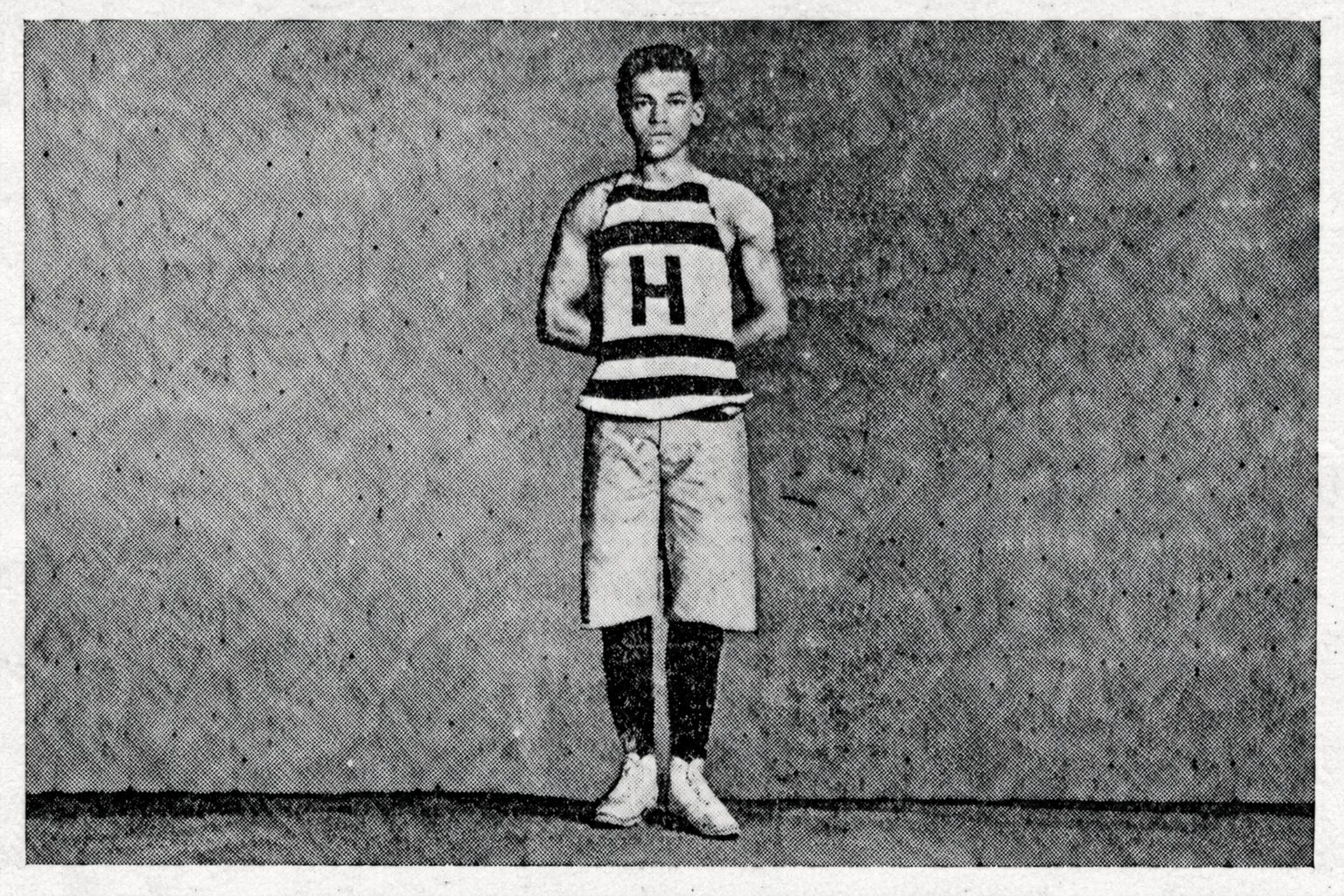
And then it was their son — Harry Haskell Lew, the reason we’re writing about this family today — who integrated the game of professional basketball in November 1902.
Let’s talk about Harry Lew. He was born January 4, 1884, the oldest of four children, and grew up in the same house on Mount Hope Street in Lowell that his grandparents had opened to escaped slaves.
Everyone called him Bucky.
Basketball was pretty new — James Naismith had invented it in Springfield, Mass., in 1891 — and the game spread quickly through YMCAs across New England. Bucky started playing for the Lowell YMCA at 14, and by 1902, Lowell had two professional teams in the New England Basketball League.
Like the rest of professional basketball at the time, both teams were all white, but local newspapers pressured James Gray, manager of the Pawtucketville Athletic Club in Lowell, to give Lew a chance.
Eventually, Gray signed the 18-year-old Harry Lew as his lone substitute, but told him he wouldn’t actually play.
As Lew remembered it, Gray told him all he had to do was “sit on the bench for my five bucks pay.” ($5 then was about the equivalent of $200 today.)
On November 6, 1902, however, 124 years ago this week (and 44 years before the start of the NBA), Pawtucketville played in Marlborough, Mass., and one of Lew’s teammates was injured.
At first, Gray actually chose to play with just four men rather than play a Black substitute. But, the crowd, including people who had traveled from Lowell, “got real mad and almost started a riot, screaming to let me play,” Lew recalled.
Gray relented, and when Lew took the floor, he became the first Black player in a professional basketball game.
Newspapers barely mentioned any of this at first, though one said he played well.
But, as the season went on, he became hard to overlook, especially on defense, and by December the Lowell Daily Courier wrote: “Lew is a gentle little man to look at, but when the whistle blows, he becomes a whirlwind.”
By the end of the season, another paper called him a star.
Lew took more than his share of elbows and knees from white opponents. Years later, he compared his experience to Jackie Robinson’s and said he “got the same treatment and even worse.”
But he also said he gave it right back, and that some of the men who hit him hardest later became good friends.
After a season with Pawtucketville, he signed with a new team in Haverhill, about 20 miles from home, where he became a fan favorite and usually guarded the other team’s best player.
Of course, this wasn’t quite an “and then everyone was no longer racist” story.
In 1904, for example, Lew’s team played a top team from Natick, and the Natick players reportedly refused to try while Lew was on the floor. Lew actually sat out so the game could continue.
The league fined Natick, and Lew came back to help Haverhill reach the championship — which it lost to Natick.
I guess it would be a better story if they had won, but we can’t change history. We can note that the league itself folded soon after, but Lew kept playing for another two decades, into his 40s, for teams that traveled around New England.
He also coached a local college team and refereed games, breaking barriers in both.
Then, he went to work full time in the family dry-cleaning business.
He liked boxing and opera and rarely talked about basketball.
His granddaughter, Wendy Johnson, said she heard about his groundbreaking play only when she was being picked on as a child. He told her she wouldn’t be able to please everybody, but if she did her best, she’d know it in her heart.
In 1958, at his daughters’ urging, Harry Lew finally gave an interview about his career to the Springfield Union newspaper.
He died of prostate cancer on October 22, 1963, at 79, and was buried a few miles from where the Naismith Basketball Hall of Fame opened five years later. The Naismith Hall featured him in a 2001 exhibit on the game’s Black pioneers but never inducted him.
This past August, the American Basketball Hall of Fame in Detroit did, and Wendy Johnson accepted on his behalf.
“He is being remembered,” she said, “and I appreciate that with all my heart.”
(Credit on this one to the “Overlooked No More” feature at the New York Times and the University of Massachusetts at Lowell.)
7 other moments from history this week
Sunday, Nov. 1: “I pray Heaven to bestow the best of Blessings on this House and all that shall hereafter inhabit it.” — John Adams to Abigail, writing the day after he moved into the unfinished White House on this day in 1800.
Monday, Nov. 2: “Will anyone hearing this broadcast please communicate with us, as we are anxious to know how far the broadcast is reaching.” — Announcer Leo Rosenberg during KDKA’s Harding–Cox election returns broadcast on this day in 1920.
Tuesday, Nov. 3: “The 1960’s can be—and must be—the crucial ‘Decade of Development.’” — President Kennedy, in his March 1961 message to Congress on foreign aid; he established USAID under the new Foreign Assistance Act on this day in 1961. The agency traced its roots to the Marshall Plan.
Wednesday, Nov. 4: “Now we must redefine ‘tool,’ redefine ‘man’ or accept chimpanzees as human.” — Louis Leakey, answering a telegram from Jane Goodall, who on this day in 1960 watched a chimpanzee she called David Greybeard make and use a tool. Goodall, 26, saw him strip the leaves from a stalk and use it to pull termites from their mound.
Thursday, Nov. 5: “Fifty-two fundamental errors.” — Parker Brothers’ reason for rejecting Charles Darrow’s game, as the company’s own history tells it; it began marketing Monopoly on this day in 1935 after Darrow’s homemade sets sold well in Philadelphia stores.
Friday, Nov. 6: “If it’s Sunday, it’s Meet the Press.” — The show’s longtime slogan; “Meet the Press” made its TV debut on NBC on this day in 1947, hosted by co-creator Martha Rountree. It began as a Saturday night show and is now the longest-running program on American television.
Saturday, Nov. 7: “All I can say is that the work has been well done in every way.” — William Van Horne, asked for a speech after Donald Smith drove the last spike of the Canadian Pacific Railway at Craigellachie on this day in 1885.
I would just like to point out that basketball was invented by a Canadian.
Having spent the last 16 days taking the train across Canada, I have marvelled at skill and work that went into the cross country rails. It’s a shame that passenger travel is being treated as second to freight today, as the experience is one worth having,